
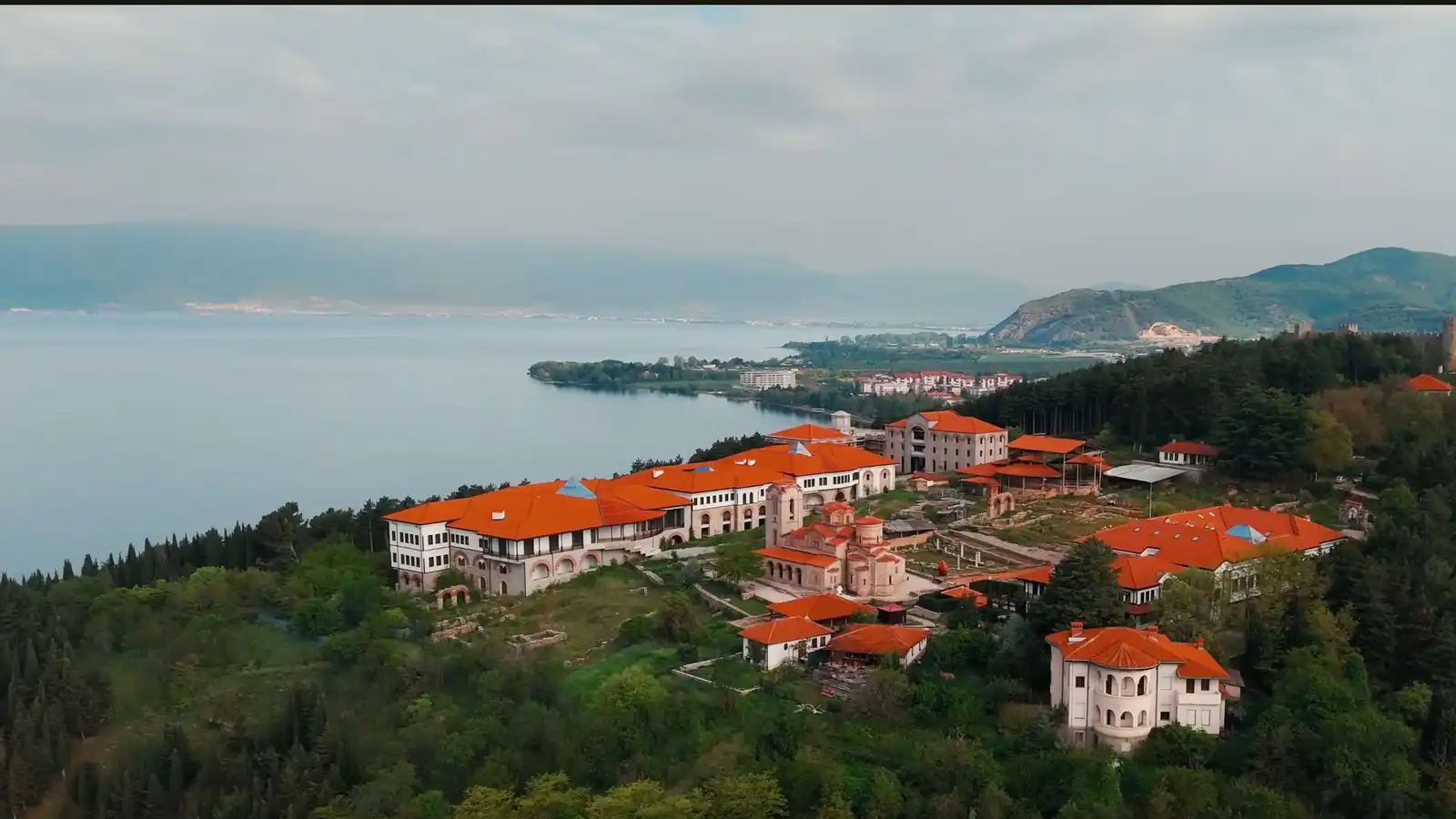
Ohrid keeps surprising people. Guests often book a ride there just to “see the lake for a day”, and then message us from the hotel asking how to extend their stay. Our chauffeurs bring travelers to Ohrid all year, most often from Skopje, Pristina, or Tirana. Over the years we have learned which sights are worth your time, what things cost, and where first-time visitors lose hours they could have spent better. This guide covers all of it, from the Old Town and the Kaneo church to the Monastery of Saint Naum near the Albanian border.
Why Lake Ohrid Deserves More Than a Quick Stop
Ohrid is one of Europe’s rare mixed UNESCO World Heritage properties. Lake Ohrid was first inscribed for its natural value in 1979, and the listing was extended a year later to include the region’s cultural heritage. Very few destinations carry both recognitions at once.
The lake itself is the main reason. Lake Ohrid is one of the oldest lakes in Europe, reaching 288 meters at its deepest point, and it shelters more than 200 endemic species found nowhere else. About a third of the lake belongs to Albania, and on a clear day you can see the Albanian shore from the town promenade.
Then there is the town. The saying goes that Ohrid once had 365 churches, one for each day of the year, which earned it the nickname Jerusalem of the Balkans. Not all of them survive, but the concentration of medieval churches, frescoes and archaeological sites in such a small area is remarkable.
Things to Do in Ohrid Old Town
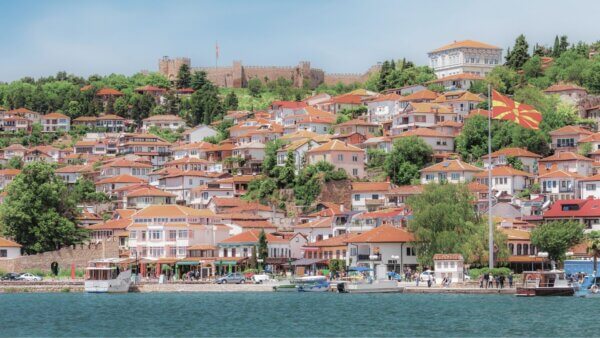
The Old Town climbs the hill between the harbor and Samuel’s Fortress. Narrow cobbled lanes, tall Ottoman-era houses leaning over the street, and a church around almost every corner. Wear comfortable shoes. The whole area is uphill and the stones get slippery.
Church of Saint Sophia
Built in the 11th century, Saint Sophia is one of the most important medieval monuments in North Macedonia. It even appears on the 1,000 denar banknote. During Ottoman rule it served as a mosque, and the frescoes were plastered over, which accidentally preserved them. Today you can see them restored inside.
The Old Bazaar and the Chinar Tree
The bazaar street connects the main square with the upper gate of the Old Town. At its top stands a plane tree, the Chinar, estimated to be around a thousand years old. Small shops here sell two things Ohrid is known for: handmade paper and Ohrid pearls.
Ohrid Pearls and the Paper Workshop
Ohrid pearls are not sea pearls. They are made using a coating produced from the scales of the plašica, a small fish that lives only in Lake Ohrid. Two local families guard the recipe and have passed it down for generations. Expect to pay noticeably less than for sea pearls, and buy from the established workshops rather than street stalls.
The National Workshop for Handmade Paper demonstrates paper making the way it was done centuries ago, and it houses a working replica of a Gutenberg press. Entry is free, they earn from selling prints and souvenirs, and the demonstration takes ten minutes. Worth it, especially with kids.
The Climb: Kaneo, Plaošnik, the Theatre and the Fortress
Four of Ohrid’s biggest sights sit on the same hill, so plan them as one walk. What we tell guests in the car: start early, go up along the lake side, come down through the fortress gate, and count on two to three hours in total. One more tip: bring denars in cash, because the ticket booths rarely accept cards.
Church of Saint John at Kaneo
The 13th-century church on the cliff above the water is the most photographed spot in North Macedonia, and it earns that status. You can reach it along the wooden boardwalk over the lake from the harbor, or by a small taxi boat for a few euros. Entry to the churchyard is free, and the sunset from here is the best in town.
Plaošnik
A short climb above Kaneo, Plaošnik is where Saint Clement founded his school in the 9th century, a place many consider one of the earliest centers of Slavic literacy in Europe. The rebuilt Church of Saints Clement and Panteleimon holds his tomb, and glass floors reveal early Christian mosaics below. The entrance fee is around 150 denars, roughly 2.50 euros.
Ancient Theatre of Ohrid
Built around 200 BC, this is the only Hellenistic theatre in North Macedonia. Romans later used it for gladiator fights. It still hosts concerts every summer, and watching a performance with the lake behind the stage is a memory that stays with you.
Samuel’s Fortress
Tsar Samuel made Ohrid his capital around the year 1000, and his fortress still crowns the hill. There is not much inside the walls, so come for the ramparts. The walk along them gives a full circle view over the town, the lake and the Galičica mountains. The entrance fee is small, around 2 to 3 euros in denars, and the stone steps are steep, so watch your footing.
Monastery of Saint Naum: The Trip Everyone Asks About
Saint Naum sits 29 kilometers south of Ohrid, right at the Albanian border. The monastery was founded in the year 905. The current church, rebuilt between the 16th and 17th centuries, holds the tomb of Saint Naum. Local tradition says that if you press your ear to the tomb, you can still hear his heartbeat. Peacocks roam the gardens, and the springs behind the complex feed the lake with water so clear you can count the plants on the bottom.
You have three realistic ways to get there:
- Boat from Ohrid harbor: around 10 to 20 euros return depending on the boat, departing around 10 in the morning and returning mid-afternoon. The ride takes about 90 minutes each way. Pick a boat that stops at the Bay of Bones if you want to see both in one day.
- Car: 40 to 45 minutes along the lakeside road, with the freedom to stop at viewpoints, the Bay of Bones and the village of Trpejca, a beach spot locals like to call the Macedonian Saint-Tropez.
- Local bus: the cheapest option, about an hour, but schedules thin out off season.
At the monastery, the church entrance costs around 120 denars, about 2 euros. The rowing boat ride on the springs costs around 5 euros per person and lasts half an hour. Take it. The springs are the most memorable part for many of our guests.
One warning from experience: July and August afternoons at Saint Naum get very crowded. If we are driving guests there in peak season, we suggest arriving before 10 in the morning. Entrance fees and boat prices also change seasonally, so confirm them locally before setting out.
Bay of Bones: A Village Standing on the Water
About 16 kilometers south of Ohrid, the Bay of Bones is a reconstruction of a prehistoric pile settlement that stood over the water here between 1200 and 700 BC. Around two dozen huts on a wooden platform show how people lived on the lake three thousand years ago. The entrance fee is around 120 denars, and a visit takes 30 to 40 minutes. It pairs naturally with the drive to Saint Naum.
Galičica National Park: Two Lakes From One Peak
The mountain wall east of the lake is Galičica National Park, which separates Lake Ohrid from Lake Prespa. The road over the mountain climbs to viewpoints where you can see both lakes at once. Hikers aim for Magaro peak at 2,255 meters, a demanding but marked trail. Ohrid is also one of the cheapest places in Europe to try tandem paragliding, with launches from Galičica and landings by the lake.
The mountain road is narrow and has hairpin bends. It is a rewarding detour in good weather, and one we skip in fog or snow.
What to Eat: Trout, Beans and White Rakija
Ohrid trout is the famous local fish. Wild stocks are protected, and much of what restaurants serve comes from farms. Grilled trout at a lakeside restaurant costs around 8 to 12 euros. Beyond fish, order tavče gravče (baked beans in a clay pot), shopska salad and local wine from the Vranec grape. Rakija comes in two versions here, white and yellow. The yellow one is aged and has a fuller flavor. Prices in Ohrid remain low by European standards, and a full dinner for two with wine rarely passes 40 euros.
Best Time to Visit Ohrid
From the road, this is how the seasons look:
- May, June and September: the best months. Warm enough to swim from mid-June, sights open, no crowds.
- July 12 to August 20: the Ohrid Summer Festival, running since 1961, fills the Ancient Theatre and churches with concerts and theatre. Great atmosphere, but this is also peak season with daytime heat above 30°C and full hotels.
- October to April: quiet and atmospheric, some boats and restaurants close, and the mountain sections on the way from Skopje can see snow.
How to Get to Ohrid
Most travelers reach Ohrid from Skopje. The drive covers around 170 kilometers and takes roughly two and a half to three hours through Gostivar and Kičevo, though roadworks and summer traffic can stretch that. Many guests book our private taxi from Skopje to Ohrid straight from the airport, since Skopje Airport sits on the same side of the city and there is no need to go into the center first.
If you want to see Ohrid without changing hotels, a day trip works too. With a private driver from Skopje, you can leave in the morning, cover the Old Town and Saint Naum, and be back in the capital for dinner. It makes for a long day, but guests do it regularly and rarely regret it.
Coming from the west, the drive from the Albanian capital takes around two and a half to three hours depending on the border and traffic. A transfer from Tirana to Ohrid usually goes through Elbasan and crosses into North Macedonia at Qafë Thanë near Struga, and the first views of the lake open up as the road descends toward it.
Ohrid also has its own airport, St. Paul the Apostle (OHD), about 10 kilometers northwest of town, a 15-minute drive. It handles mostly seasonal European flights, and an Ohrid Airport taxi booked in advance saves you from negotiating a fare at the curb.
Frequently Asked Questions
How many days do you need in Ohrid?
Two full days cover the essentials: one for the Old Town, Kaneo, Plaošnik and the fortress, and one for Saint Naum with the Bay of Bones. Add a third day for Galičica, the beaches or a boat day on the lake.
How far is Ohrid from Skopje?
Around 170 kilometers by road. The drive takes roughly two and a half to three hours, depending on traffic and roadworks.
How do you get from Ohrid to Saint Naum?
By boat from the harbor (about 90 minutes each way, 10 to 20 euros return), by car in 40 to 45 minutes, or by local bus in about an hour.
When is the best time to visit Ohrid?
May, June and September offer warm weather without the peak crowds. The Ohrid Summer Festival runs from July 12 to August 20 if you want concerts in the Ancient Theatre.
Does Ohrid have an airport?
Yes. St. Paul the Apostle Airport (OHD) is about 10 kilometers from town, a 15-minute drive, with mostly seasonal European flights.
Get In Touch
Don’t hesitate to ask for a quote. Contact Balkan Chauffeur for your journey or renting a chauffeured car.
Related Posts

How to get from Skopje to Ohrid?
Planning a trip from Skopje to Ohrid? This guide provides all the practical information you need...

Skopje Limo Service
The most popular private transfers and tours from Skoje Skopje Airport Taxi Skopje to Ohrid Skopje...

9 Incredible Day Trips From Skopje, North Macedonia
Day Tours From Skopje - Introduction Visiting the largest city in North Macedonia will leave you...
Skopje Airport Taxi Transfer at fixed price
FAQ about Skopje Airport Taxi Services How far is Skopje Airport from the city center? Skopje...
