

Spring in Montenegro is the season most travelers underrate. We drive guests across the country year-round, and the March–May window is the one we keep recommending for clients who want serious mileage without the summer compromises — empty roads, mild temperatures, prices that haven’t yet jumped, and the kind of scenery the country built its reputation on. The catch: the sea is still too cold for proper swimming. If beach time is the priority, you want July or August.
This post is the version we tell guests in the car when they ask whether spring is the right call. What works, what doesn’t, where to go, and how to plan the day so you actually use the season’s advantages instead of fighting them.
Why Spring Works in Montenegro
The numbers most travel sites skip:
- Coastal temperatures: 15–22°C (59–72°F) — comfortable for walking, hiking, sightseeing
- Mountain temperatures: 5–15°C (41–59°F) — bring layers
- Sea temperatures: 15°C (59°F) in March, 17°C in April, 18–19°C by late May. Cold for most travelers; a quick dip is possible by May, but lounging in the sea is not
- Rainfall: 10–15 days per month, mostly short showers. The same rain keeps the mountains green and the rivers full
- Crowds: noticeably thinner everywhere except Easter weekend
- Accommodation costs: 30–50% lower than peak summer in most coastal towns
From a driver’s perspective, spring is also the easiest time to drive Montenegro’s coastal road. In summer the same road between Tivat and Budva can take twice as long because of beach traffic. In April, you don’t notice traffic at all.
Where to Go in Montenegro in Spring
Montenegro is small — 13,812 km² — which means you can cover most highlights in a 5–7 day spring trip. Below are the destinations we recommend in order of how often clients book them.
Kotor: The Old Town and the Walls
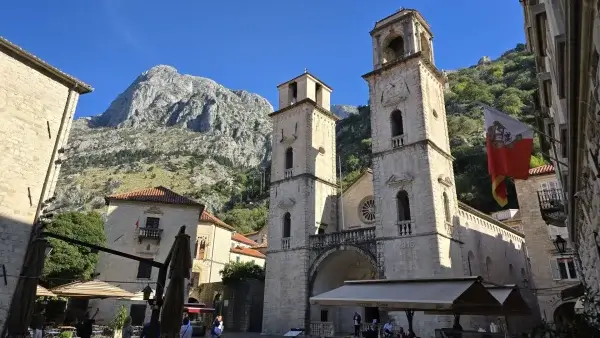
Kotor is the centerpiece of any Montenegro spring visit. The medieval walled town sits at the base of vertical cliffs, with the Bay of Kotor wrapping around it. Spring is when the climb to San Giovanni Fortress works best — 1,355 steps up the cliff, 1.5–2 hours round trip, with views over the bay that make it worth every breath. Entry is around €15 in current pricing (it has been climbing year-on-year).
- Old Town — walkable in under an hour, dense with churches, palaces, and squares. Pleasant in spring; uncomfortable in July.
- Maritime Museum — well-curated, around €4 entry, 45 minutes of your time
- Boat tour to Our Lady of the Rocks and Perast — runs in spring at reduced frequency, but it does run. Check before booking.
- Cobblestones get slick when wet — the spring showers can catch you out. Decent shoes matter.
Kotor is the natural starting point for a Montenegro trip. Most of our clients arrive at Tivat Airport or fly to Dubrovnik and drive south. Either route is straightforward.
Useful transfers to and from Kotor:
- Tivat to Kotor — 11 km, 15–20 minutes
- Dubrovnik to Kotor — 90 km, 2 hours plus border
- Podgorica Airport to Kotor — 90 km, 1.5 hours
Budva: The Riviera Before the Rush
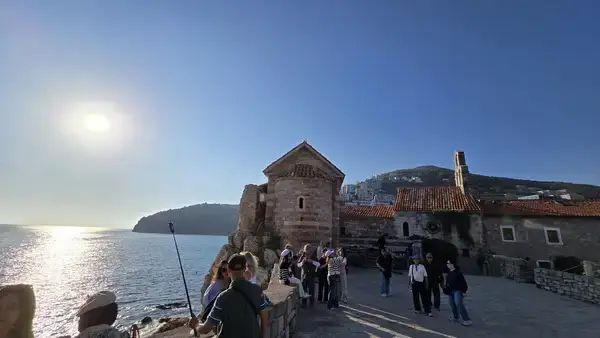
23 km south of Kotor, about 30 minutes by car. Budva in spring is the version of the town you can actually enjoy — Old Town walkable without elbowing through tour groups, beach clubs not yet open at full volume, restaurants where you don’t need a reservation.
- Old Town Citadel — €5 entry, 20–30 minutes inside, panoramic views from the walls
- Mogren Beach — accessible via a clifftop path from town, 10–15 minutes walk. Stunning in spring even if the water’s too cold to swim
- Sveti Stefan — 8 km south. The Aman resort that occupies the islet is reopening for the 2026 summer season after years of closure. The beaches around the causeway are open to the public regardless
- Local food — grilled squid with blitva (chard) at a local konoba runs €12–18. Spring prices, not summer prices.
For travelers based in Tivat or Kotor, Budva works as a half-day or full-day trip. Useful transfers:
- Tivat to Budva — 30 minutes
- Podgorica Airport to Budva — 1 hour
- Tirana Airport to Budva — 3.5 hours, useful if flying via Albania
Tivat: Marina, Calm, and Convenience

11 km southwest of Kotor, 15 minutes by car. Tivat is where most international travelers actually fly into — Tivat Airport sits 4 km from the town center — and where Montenegro’s modern luxury angle plays out. Spring is when Porto Montenegro, the polished marina district, feels relaxed instead of saturated.
- Porto Montenegro waterfront — free to walk, lined with cafés, a yachting museum, and the Naval Heritage Museum (€3 entry)
- Boat tours from Tivat — 1-hour Bay of Kotor loops run €20–30 in spring, sometimes lower
- Plavi Horizonti beach 15 km south — sandy (rare for Montenegro), accessible in spring even if water’s too cold to swim
For travelers using Tivat as a base, our local Tivat private driver service handles half-day and full-day arrangements without the longer transfer leg. Useful routes:
- Dubrovnik Airport to Tivat — 90 km, 2 hours
- Podgorica Airport to Tivat — 90 km, 1.5 hours
Herceg Novi: Gardens, Mimosa, and Old Town Quiet
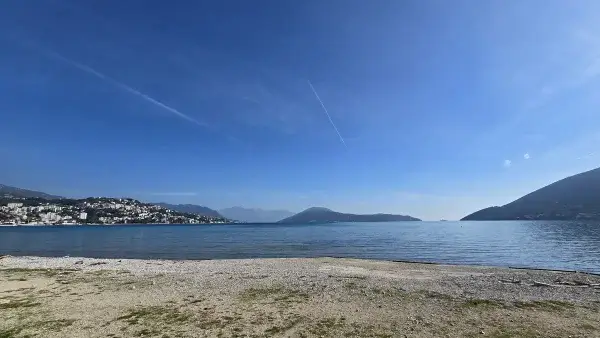
45 km west of Kotor, about 1 hour by car. Herceg Novi sits at the very mouth of the Bay of Kotor, where the bay meets the open Adriatic. Spring is when the town’s reputation as the “town of mimosa” actually shows — the trees bloom in late February through March, and the Mimosa Festival takes over the town for several weeks.
- Old Town fortress trio — Forte Mare (€4), Kanli Kula, Španjola. Allow 2–3 hours to walk all three with the connecting promenades
- Savina Monastery — peaceful gardens, free entry, 30-minute visit
- Igalo just west of town — known for medicinal mud at the Institute Igalo spa
- 3 km seafront promenade — one of the more pleasant walks on this stretch of the coast
For travelers wanting to combine Herceg Novi with airport transfers:
- Tivat to Herceg Novi — 45 minutes
- Dubrovnik Airport to Herceg Novi — 50 minutes, single border crossing
Perast: Stone Houses and the Island Church
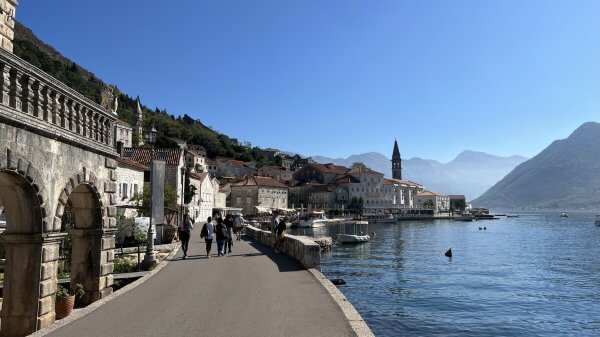
12 km north of Kotor, 20 minutes by car. Perast is a single-street stone village on the Bay of Kotor with two small islands directly offshore. Spring keeps it quiet enough that you can actually photograph the waterfront without other people in the frame.
- Boat to Our Lady of the Rocks (Gospa od Škrpjela) — small wooden boats run from the waterfront. Round trip around €5–10 per person. Church entry €2.
- Walk the waterfront — about 1 km of stone houses, palaces, and churches
- Seafood lunch — Perast’s small restaurants serve fresh fish with bay views. Mussels in garlic sauce around €12–15.
Perast is too small for a full day visit. The standard pairing is Kotor in the morning, Perast for lunch and the boat trip, return to Kotor — a relaxed 6-hour outing.
Cetinje: The Old Royal Capital
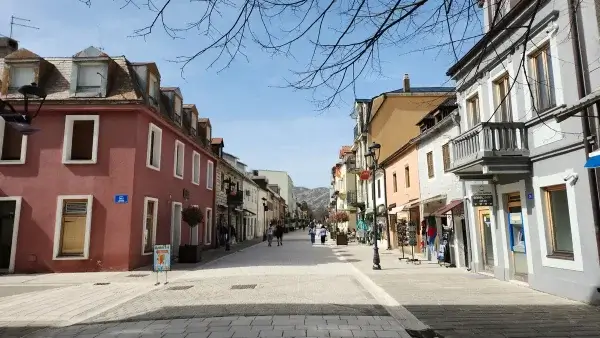
36 km from Budva, about 45 minutes by car. Cetinje was Montenegro’s royal capital before independence and remains the country’s cultural center. At 650 meters elevation, spring temperatures sit around 12–18°C — cooler than the coast, often more comfortable for walking.
- National Museum complex — €15 combined ticket covers four museums (Historical, Art, Petrović King, Ethnographic). Plan 2–3 hours
- Cetinje Monastery — free entry, important Orthodox pilgrimage site
- King Nikola’s Palace and Biljarda residence — both small, both worth the included ticket time
For travelers interested in Montenegrin history beyond the obvious coastal sights, Cetinje is the day trip we recommend most. Often combined with a stop at Lovćen National Park on the same route — Njegoš Mausoleum at the top of the mountain offers a panoramic view across half of Montenegro.
Durmitor National Park: Mountains in Bloom
170 km from Kotor, 3 hours inland by car. Durmitor in spring is dramatically different from the coast — wildflowers, melting snow, and the country’s deepest canyon. Black Lake (Crno jezero), 3 km from Žabljak town, is the easiest entry point. The 4 km loop trail around it takes about an hour.
- Tara Canyon — Europe’s deepest at 1,300 meters, dramatic in spring with high water
- Park entry around €3/day — modest
- Hiking conditions — by mid-May, lower trails are clear of snow. Higher peaks like Bobotov Kuk (10 km, 6–8 hours) are doable late spring with proper gear
- Žabljak town for accommodation — small, basic, but functional
One important reality check about spring in Montenegro: the country has two completely different climates running in parallel from March through May. While you’re sipping coffee in a t-shirt in Budva or Tivat, the road up to Žabljak (the entry point to Durmitor) can still hit snow and ice on the higher passes — particularly the Sedlo pass and the road over Lovćen. We see this every year. Renting a small economy car on summer tires and driving yourself up these roads in April or early May is a genuinely bad idea, and not all rental companies make it clear what their cars are equipped for. Our drivers know which routes are passable in any given week, and our vehicles are prepared for both — the same Mercedes that picks you up at the warm coast handles the mountain roads without drama.
Durmitor requires a separate trip from the coast — too far for a day. For travelers spending 5+ days in Montenegro, it’s the easiest “second region” to add after the Bay of Kotor and Budva Riviera.
Practical Tips for Montenegro in Spring
Getting Around
Montenegro’s coastal road is two-lane and slow, but pleasant in spring. From Podgorica Airport (TGD), Kotor is 90 km / 1.5 hours. From Tivat, 11 km / 15 minutes. Public buses run between major towns at €5–12 per leg. For multi-stop or remote destinations like Durmitor, a private chauffeur is significantly faster than navigating on your own.
Packing
Layers do most of the work. A light rain jacket and waterproof shoes handle coastal showers. For Durmitor or Lovćen, a fleece and proper hiking shoes. Sunscreen by mid-April; the sun on clear days is stronger than you’d expect.
Budget
Around €60–80 per person per day covers food, entry fees, and short transfers (excluding lodging and main intercity transport). Guesthouses €50–80/night, hotels €90–140 in the coastal towns. Petrol around €1.40–1.60/liter at recent prices.
Sea temperatures by month
- March: 14–15°C (57–59°F)
- April: 16–17°C (61–63°F)
- May: 17–19°C (63–66°F)
Comfortable swimming starts in late June. If a beach day is essential, plan summer.
Spring Events Worth Catching
- Mimosa Festival (late February through March, Herceg Novi) — the country’s longest-running carnival, with parades, music, masks, and street food. Free to attend.
- Kotor Carnival (late February or early March, depending on Easter) — masked parades, traditional music, smaller than Herceg Novi but more atmospheric
- Orthodox Easter (April or May, dates shift annually) — church services, processions, traditional Easter food. Worth experiencing if you happen to overlap.
- Wild Beauty Art Festival (late spring, Budva) — music and theater, tickets typically €5–20
Why Spring Beats Summer for Most Travelers
Summer’s heat — 30°C+ in coastal towns, often higher in Podgorica — is what catches travelers off guard. We’ve driven plenty of July routes where clients wilt by mid-afternoon and start cancelling stops. Spring keeps you moving comfortably.
The trade-off is real: spring is not a beach holiday season in Montenegro. The sea is too cold, beach concessions don’t yet operate at full capacity, and some smaller seasonal restaurants are closed. If swimming is the centerpiece of your trip, plan summer or early autumn (September is the best month overall).
For everything else — Old Towns, walls, mountains, monasteries, museums, food, walks, scenic drives — spring genuinely beats summer.
How We Help Clients With Montenegro Spring Trips
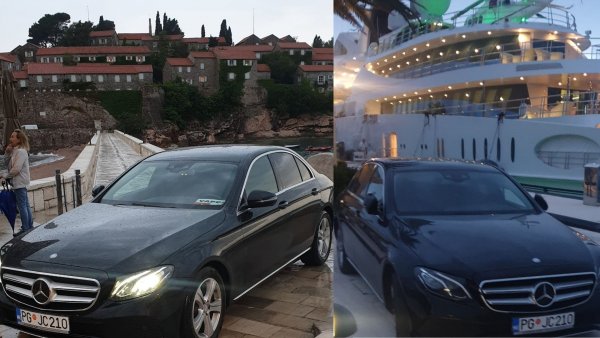
For most Montenegro itineraries, the easiest setup is a chauffeured day or multi-day arrangement instead of a rental car. Where having a driver actually matters in spring:
- Coastal road navigation — Kotor to Budva to Sveti Stefan involves narrow bends, limited parking in old town centers, and locations where dropping off and being picked up later is faster than parking
- Cross-border days — Dubrovnik to Kotor, or one-way transfers between Croatia and Montenegro
- Inland day trips — Cetinje, Lovćen, and especially Durmitor benefit from a driver who knows the mountain roads
- Multi-stop days — Kotor + Perast + Tivat in one day, or Budva + Cetinje + Lovćen, work much better with a chauffeur than with a rental
- Airport pickups — direct from Tivat Airport, Podgorica Airport, or Dubrovnik with a stop on the way
For longer multi-day arrangements, see our Montenegro chauffeur service with door-to-door pickup, no fixed schedule, and routes built around what you actually want to see. Send us your dates, group size, and the destinations on your shortlist — we’ll come back with a route and a quote the same day.
FAQ: Montenegro in Spring
Can you swim in Montenegro in spring?
Not comfortably for most travelers. Sea temperatures range from 14°C in March to 19°C in May. A quick dip in late May is possible; sustained swimming and beach days only really start in late June.
Is spring rainy in Montenegro?
Moderately. 8–12 rain days per month along the coast, more inland. Showers are usually short. A rain jacket is enough — you don’t need full waterproofs.
How much does a spring trip to Montenegro cost?
Around €60–80 per person per day for food, entry fees, and local transport, excluding lodging. Guesthouses run €50–80/night, hotels €90–140 — significantly lower than peak summer rates of €130–250.
What’s the best way to get around Montenegro in spring?
For 1–2 destinations, public buses (€5–12 per leg) work fine. For multi-stop days, mountain destinations like Durmitor, or routes connecting different regions (Bay of Kotor + Cetinje + Lovćen), a private chauffeur is significantly faster and more comfortable.
Is spring crowded in Montenegro?
No — except for Easter weekend in major towns, and the Mimosa Festival in Herceg Novi. Otherwise, Kotor’s Old Town, Budva’s beaches, and most attractions are noticeably quieter than in summer.
What should I pack for Montenegro in spring?
Layers, a light rain jacket, waterproof shoes, and a fleece for mountain destinations. Sunscreen by mid-April. Walking shoes for cobblestones; proper hiking shoes if you plan Lovćen or Durmitor trails.
Are there festivals in Montenegro in spring?
Yes — the Mimosa Festival in Herceg Novi runs from late February through March, Kotor Carnival is around the same time, and Orthodox Easter brings church services and traditional food. The Wild Beauty Art Festival in Budva runs through late spring with music and theater programming.
Get In Touch
Don’t hesitate to ask for a quote. Contact Balkan Chauffeur for your journey or renting a chauffeured car.
Related Posts:

How to Get to Kotor: Airports, Buses & Transfers
Heading to Kotor? Compare the nearest airports, buses and private transfers from Dubrovnik, Tivat, Podgorica and beyond.

Why Cross-Border Transfers in the Balkans Require Local Experience, Not Just a Driver
Cross-border transfers in the Balkans are fundamentally different from cross-border travel...

Why Choose Balkan Chauffeur for Your Next Private Transfer?
Planning your next journey and need transportation you can actually trust? Here are the...

Podgorica Airport Taxi Transfer At Fixed Price

Beaches Near Budva: Where Montenegro’s Real Beach Time Happens
If you've read our guide to beaches in Kotor Bay, you already know our position: Boka has scenery,...

Tivat: Best Private Tours and Day Trips for Your Adventure
Explore the best private tours and day trips from Tivat, from Kotor to Dubrovnik. Our drivers share top picks with stunning views for an amazing trip!
