At Balkan Chauffeur, Golubac is one of our most-requested day trips with a private driver from Belgrade. It’s the headline attraction east of the capital — clients book Iron Gate (Đerdap) trips specifically to see it, and we drive that route most weeks during the season. This post is what we wish more travelers knew before going: where the fortress actually is, how the new ticket zones work, what’s worth your time on site, and how to plan the day so it doesn’t end up rushed.
Where Golubac Fortress Is
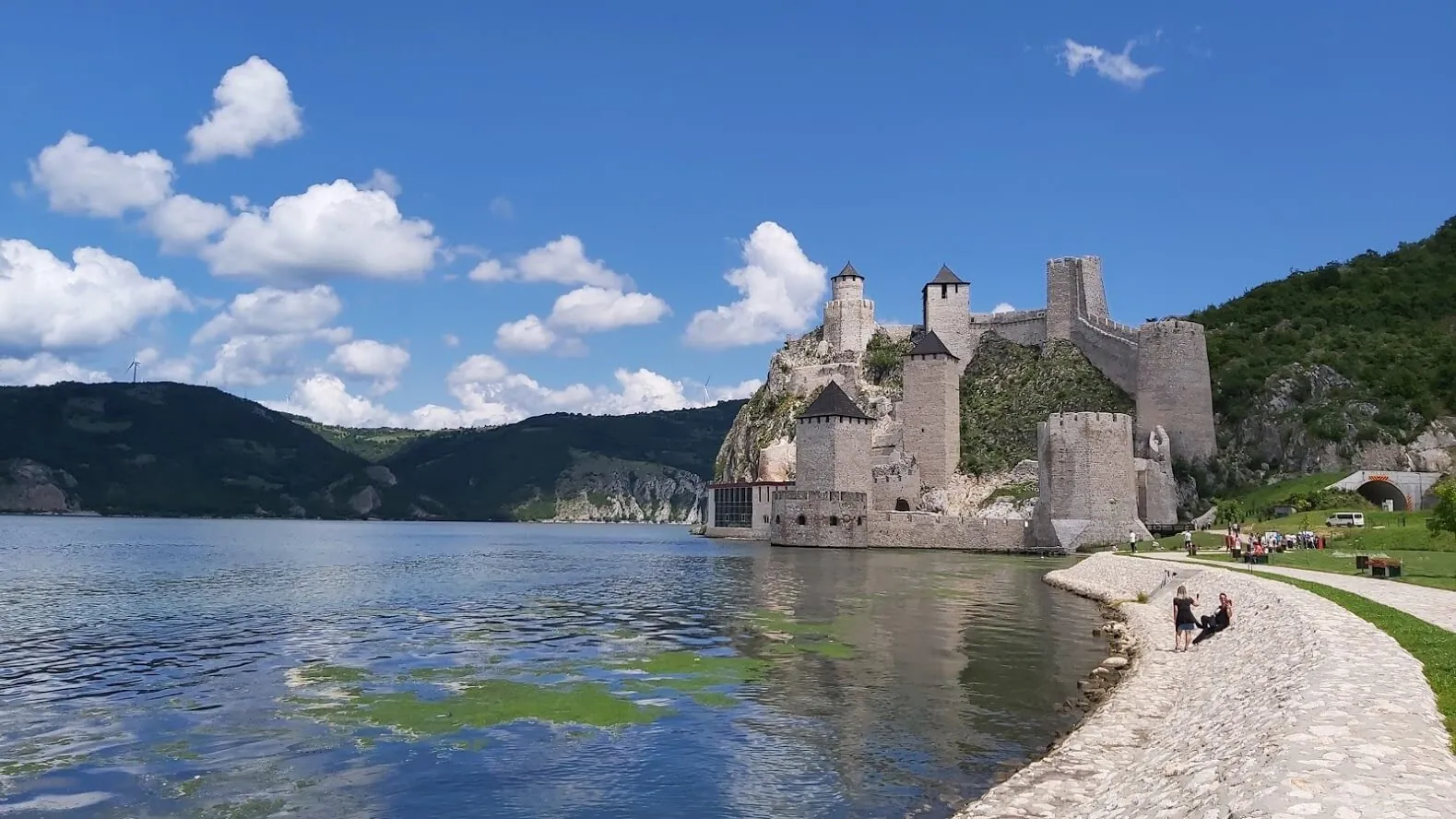
Golubac sits on the right bank of the Danube, about 4 km downstream from the modern town of Golubac, at the entrance of the Iron Gate (Đerdap) Gorge. From Belgrade:
- About 130 km east of Belgrade — roughly a 1.5-hour drive via Požarevac and Veliko Gradište
- 30 km from Ram Fortress
- About 9 km from Tumane Monastery
- 45 km from Silver Lake (Srebrno jezero)
- The Romanian shore is straight across the Danube
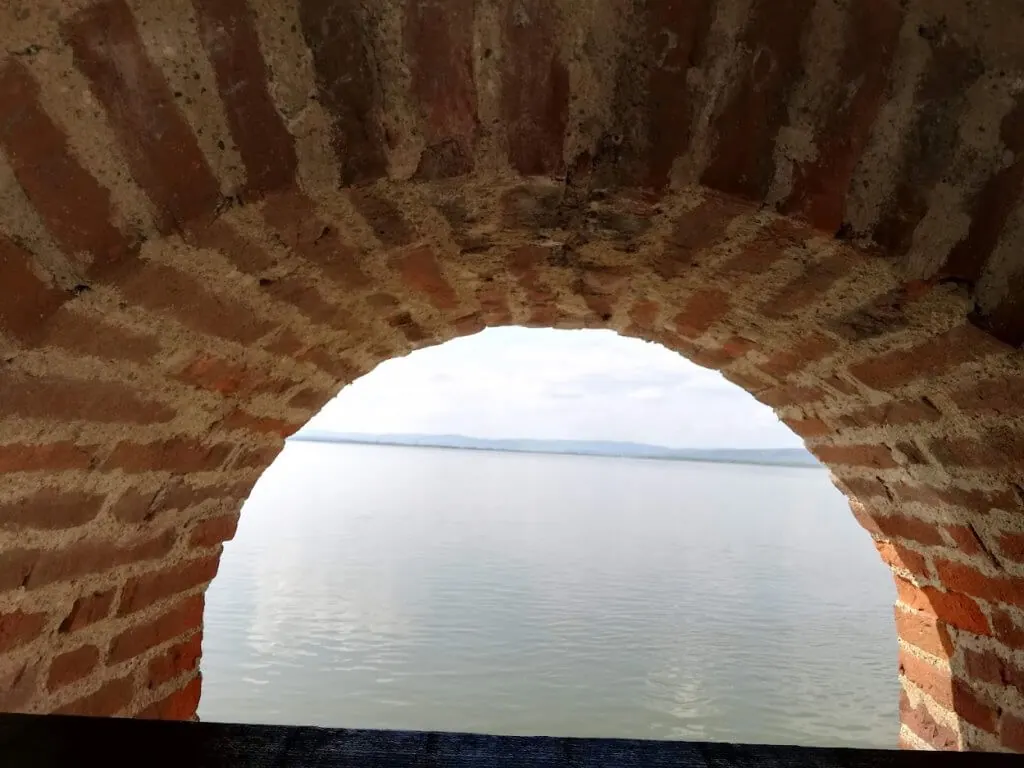
This stretch of the Danube is one of the river’s most striking. Right at the fortress, the Danube widens to roughly 6 km — almost lake-like — and a few hundred meters downstream it suddenly narrows into the gorge. You go from “this looks like a sea” to “this is a canyon” in about ten minutes of driving.
A Quick History — How a Border Castle Survived 700 Years
Most online articles repeat the same long history of Golubac. Here’s the version we actually tell clients in the car:
- The site was used long before the medieval fortress. There’s evidence of a Roman castrum (Castrum Columbarum) and earlier Byzantine presence in the foundations.
- The fortress as we see it today was built in the early 14th century. It’s first documented in 1335, under Hungarian control. Who actually started it — Serbs, Hungarians, or Byzantines — is still debated by historians.
- For four centuries it sat on the frontier between three powers: the Ottomans, the Hungarians, and the Serbs. It changed hands constantly. Local sources say the fortress is believed to have withstood more than 120 attacks over its active life.
- The Ottomans took it in 1391 and held it for most of the next 470 years, with periods of Hungarian and Habsburg control in between. Serbia recovered it in 1867, when Knez Mihailo Obrenović reclaimed all the remaining Ottoman fortresses on Serbian soil.
- Between 2014 and 2019 the fortress went through a roughly €6.6 million reconstruction funded by the EU through the Austrian Development Agency. It reopened to visitors on 30 March 2019, and the change is dramatic — older photos online still show ruins that don’t exist anymore.
What You Actually Get to See on Site
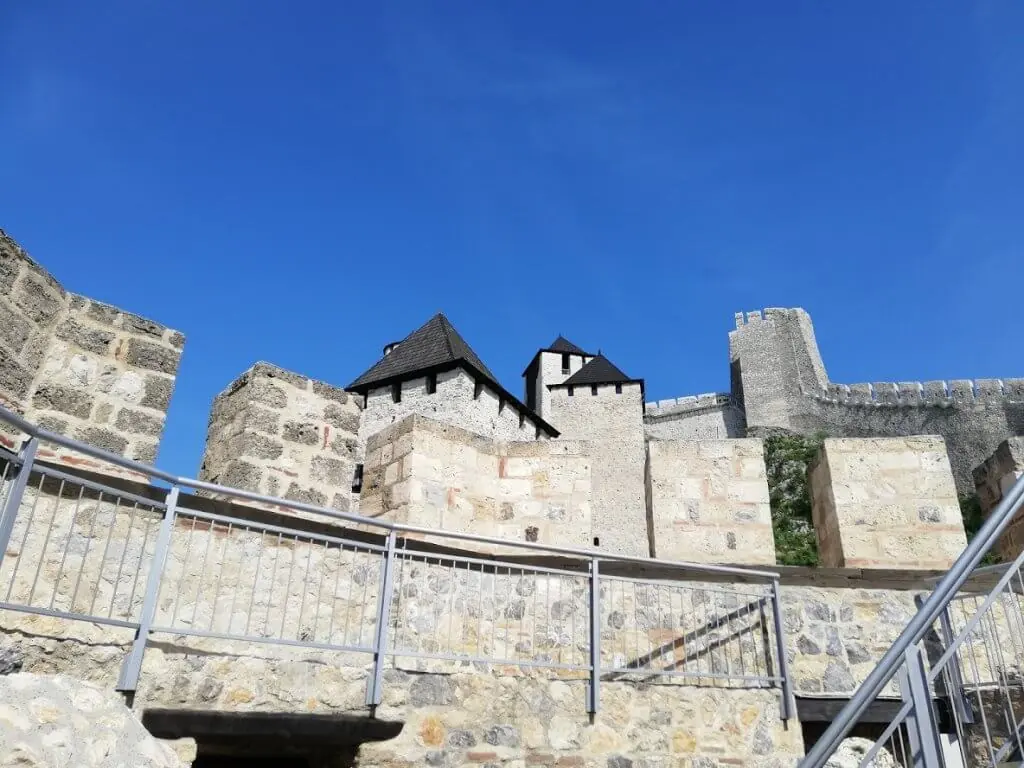
The fortress is split into three parts — front, back, and upper city — with 10 towers connected by walls 2–3 meters thick. After the reconstruction, access was divided into four zones based on difficulty. Most travelers do only the Green Zone. Here’s how it breaks down.
Green Zone
Open to everyone, including children with parents. Includes the Palace, plus Tower 5 (history exhibition), Tower 8 (the main entrance tower, with an exhibition on the medieval Order of the Dragon — the chivalric order Vlad the Impaler’s father belonged to), and Tower 9 (the Cannon Tower, now a viewpoint reached by a stone footbridge). This is what we book for almost every client.
Blue Zone
Adds Towers 3 and 4. Adults only, accessed only with a guide from the complex. Limited group size, requires reasonable fitness.
Red Zone
Adds Tower 7. Adults only with a guide. Requires real physical fitness — proper shoes, not sandals.
Black Zone
Tower 1, the Šešir (“Hat”) Tower at the top. Maximum 2 visitors at a time, escorted, with a strong recommendation against this route for anyone with vertigo or heart issues. Most clients don’t ask for this. Those who do, remember it.
Inside the complex, you also get the Visitor Center (cafe, exhibitions, shop) and an Archaeological Park with the remains of a Roman house, a medieval lime kiln, and Mahmud Paşa’s hamam — a small Turkish bath preserved from the Ottoman period.
Tickets, Hours, and What’s Included
Green Zone ticket prices, as of writing:
- Adults: around 750 RSD (roughly €6.50), parking included
- Pensioners: around 450 RSD
- Children 12–18: around 200 RSD
- Children under 12 with a parent: free
- Group ticket (10+ people): around 650 RSD per person
Other zones cost more — Blue and Red roughly 800–1,000 RSD, Black up to 1,200–1,500 RSD. Prices are adjusted periodically, so check the official site before you travel. The ticket includes parking, the Visitor Center, and the Archaeological Park.
Opening hours change by month, and the fortress is closed every Monday. As a rough guide:
- April–August: 10:00–19:00
- September: 10:00–18:00
- October: 10:00–17:00
- March and November: 10:00–16:00
- December–February: 10:00–15:00
Last ticket sales typically close 45 minutes before closing. The cafeteria and gift shop run roughly 10:00–16:30. For larger groups (10+), the complex requires advance booking at least a few days ahead. Plan accordingly if you’re traveling with a tour group or family party. Always confirm current hours and prices on the official visitor center site before you go.
The Boat Ride Around the Fortress
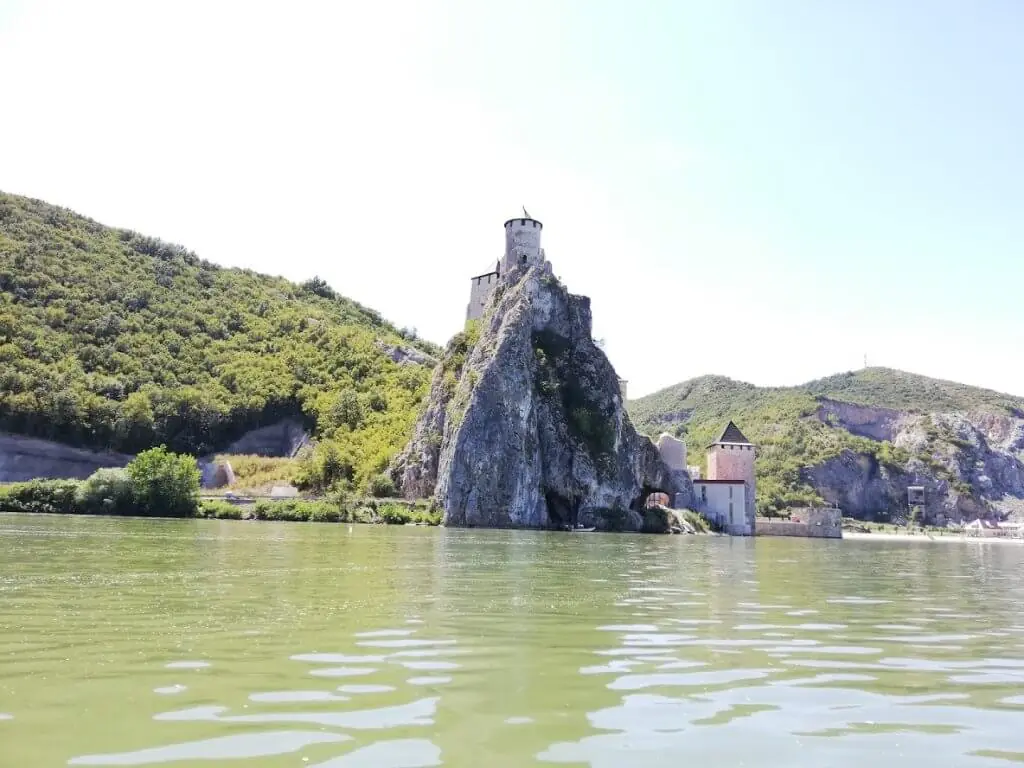
One thing the photos don’t show is how different the fortress looks from the water. There’s a 1-hour speed boat ride that operates from Golubac town’s marina, runs around the base of the fortress, and continues a short way into the Iron Gate Gorge. It’s typically available from late spring through early autumn — outside the season, weather and water levels stop it. Several local operators run these tours from the marina. Booking ahead is safer in July and August, but in shoulder season you can usually walk up and find a slot.
If you have the time, we recommend it. It’s also the best angle for photos.
How to Get to Golubac from Belgrade
By private car
The simplest route. Highway toward Niš, exit at Požarevac, then regional roads through Veliko Gradište and along the Danube to Golubac. Roughly 1 hour 30 minutes if you leave Belgrade outside rush hour.
By bus
Direct buses from Belgrade to Golubac town run a few times a day, taking around 2.5–3 hours. From Golubac town the fortress is another 4 km — there’s no public transport to it, so you’d walk along the river road or take a local taxi.
By train
Not realistic. There’s no useful train connection.
With a private driver
What we do most often. We pick you up in Belgrade, drive directly to the fortress (sometimes with a quick stop at Ram or Silver Lake), wait while you tour, and continue with whatever combination you choose — boat ride, lunch, Lepenski Vir, Tumane Monastery. The advantage over a bus is that you get the whole Iron Gate region in one day instead of just the fortress. We use the same vehicles from our Belgrade limo service for these trips, so you get a comfortable, air-conditioned ride for the long drive both ways.
What We Often Combine With Golubac
Almost no one drives 130 km from Belgrade to look at one fortress for an hour and turn back. Here’s what we typically pair it with:
- Ram Fortress — 30 km west. The smaller, older, Ottoman fortress on the Danube. Adds about 45 minutes. Most common combination.
- Speed boat ride — adds an hour, available roughly May through October.
- Tumane Monastery — 9 km from Golubac, a working Serbian Orthodox monastery. Quick stop, no entrance fee.
- Lepenski Vir — about 70 km further east in Đerdap National Park. One of Europe’s most important Mesolithic settlements. Adds 2–3 hours total. Possible the same day if you start early, but it makes for a long trip — 10–11 hours door-to-door from Belgrade.
- Silver Lake (Srebrno jezero) — 45 km west of Golubac. A common lunch or coffee stop on the way back.
- Donji Milanovac — small Danube town 50 km east, with a panoramic viewpoint over the gorge.
Realistic best combination: Ram + Golubac + boat ride + Silver Lake on the way back. That fits into about 10 hours from Belgrade and doesn’t feel rushed.
Where to Eat in Golubac Town
Golubac is a small town. Don’t expect Belgrade-level variety, but a few places do the job well:
- Restoran Nana — riverside seating, English menu, Danube fish, prices noticeably lower than Belgrade. Most clients we drop here come back happy.
- Visitor Center cafeteria — fine for coffee and a sandwich after the tour, not a full lunch destination.
The local specialty is Danube fish — usually catfish, carp, or pike-perch (smuđ). Worth ordering at least once. Skip it only if you don’t like river fish.
Honest Take: Is Golubac Worth a Full Day from Belgrade?
For a single attraction, Golubac is probably the most photogenic in Serbia. The combination of the fortress, the widest stretch of the Danube, and the gorge entrance behind it is hard to match anywhere else in the country. The reconstruction is well done — it doesn’t feel artificial — and the Green Zone alone is enough to fill 90 minutes for most visitors.
That said, it does require a real day. 1.5 hours each way of driving, 1.5–2 hours at the fortress, plus boat ride and a meal, is realistically 9–11 hours door-to-door. If your schedule in Belgrade is tight, the Iron Gate trip will eat one full day. We tell clients that’s the trade — and for almost everyone, the answer is “yes, it’s worth it.”
If you’re planning a private day trip from Belgrade that includes Golubac, Ram, the boat ride, or further into Đerdap, send us a message and we’ll build a route based on what you actually want to see.
Interested in a private tour to Golubac Fortress?
Visit Golubac Fortress and Djerdap National Park in a day-trip from Belgrade