At Balkan Chauffeur we drive guests through eastern Serbia almost every week, and Ram Fortress is one of those stops that comes up regularly on our Đerdap (Iron Gate) day trips from Belgrade. It’s not the headline attraction — that role belongs to Golubac — but for travelers who like quieter places and good Danube views, Ram is one of the better detours we know.
This post pulls together what we usually explain to clients in the car before we get there: how far it is, what’s actually worth your time on site, current ticket prices, and how Ram fits into a longer Iron Gate day trip. We’ve kept it practical and skipped the travel-blog filler.
Where Ram Fortress Sits on the Map
Ram is in the village of the same name, in Veliko Gradište municipality, on the right bank of the Danube in eastern Serbia. The numbers we deal with daily:
- About 110 km from Belgrade — roughly 1 hour 30 minutes by car using the highway
- 25 km from Požarevac
- 15 km from Veliko Gradište town
- 15 km from Silver Lake (Srebrno jezero)
- About 30 km from Golubac Fortress — around a 30-minute drive on the regional road
The road from Belgrade is good. You drive highway most of the way, then a regional road through Požarevac. Once you’re past the Belgrade ring, traffic clears and the rest is easy.
A Quick History — the Short Version
Most articles on Ram repeat the long Wikipedia-style history. Here’s what we tell clients in the car:
- The site was used long before the current fortress. There’s a Roman castrum nearby, and the older structure inside the fortress is essentially a Roman mausoleum that the Ottomans built around instead of demolishing.
- The fortress as it stands today was built in 1483, on the order of Sultan Bayezid II. It was one of the first real artillery forts in Serbia, designed for cannon warfare with 36 cannon positions — more than Belgrade Fortress had at the time.
- Its job was to defend the Ottoman frontier on the Danube against Hungarian and, later, Austrian forces.
- After 1521, when the Ottomans pushed past the Danube and took Hungary, Ram lost most of its strategic importance. It saw action again during the Ottoman–Habsburg wars of the 18th century, and was abandoned by the mid-19th century.
- A footnote we like: Vuk Karadžić, the linguist who reformed the Serbian alphabet, worked here as a young customs officer when Ram was a border post.
- Between 2014 and 2019 the fortress went through a full restoration, funded by the Turkish development agency TIKA. It reopened on 6 August 2019 and looks dramatically different from the ruin shown in older photos.
That’s the version that fits between Belgrade and Požarevac. If your driver is the talkative kind, you’ll get more on the way.
What You’ll Actually See on Site
The fortress is small. You can walk through it in about 45 minutes if you go slowly. That’s a feature, not a flaw — it means you can comfortably combine Ram with another stop on the same day.
The Donžon and the Five Towers
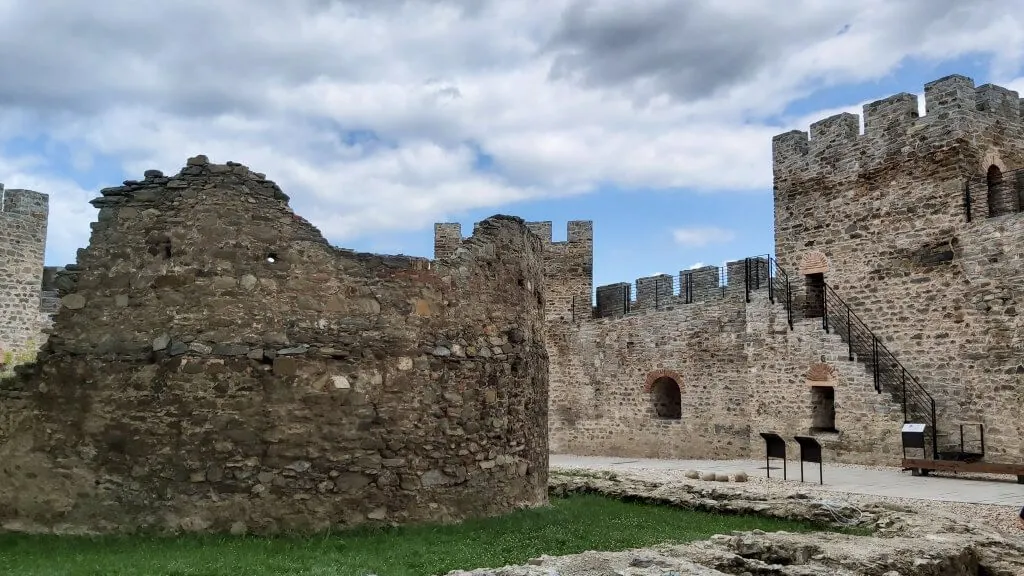
You enter through the Donžon — the main keep — at the southwestern corner. The fortress has an irregular pentagon shape, about 35 by 25 meters, with five towers connected by ramparts. Each tower has three floors plus a ground level, with cannon openings facing outward. A walkway with battlements runs along the outside of the ramparts.
The restoration used original materials only — local stone and lime mortar mixed using a 600-year-old recipe. No concrete, no iron reinforcements. Some clients find this detail fascinating, others don’t notice. Either way, it’s why the place looks authentic and not like a 21st-century rebuild.
The Ruins of the Mosque
In the central part of the fortress, you’ll see the remains of an old mosque. It hasn’t been reconstructed and likely won’t be. What’s left is more of a foundation than a building, but it’s worth a few minutes — most Serbian fortresses don’t preserve this kind of detail at all.
The Caravanserai — Only One Like It in Serbia
Just outside the fortress walls sit the remains of an Ottoman caravanserai — a roadside inn used by traveling merchants. This is the only preserved caravanserai in Serbia, which makes it small but historically rare. You can walk to it in two minutes from the main entrance. Most guidebooks miss it completely.
The Hamam
A small Turkish bath (hamam) at the eastern foot of the fortress is also part of the protected area. It’s modest and not as visually striking as the towers, but it completes the picture of what a frontier Ottoman post actually looked like.
Tickets, Hours, and Parking
Tickets
- Individual ticket: 300 RSD (around €2.50)
- Group ticket (3 or more people): 200 RSD per person
- Free entry for children under 7, people with disabilities, and licensed tour guides
Prices have been stable for a few years, but it’s worth checking with the Veliko Gradište tourism office before you go if you’re traveling on a tight schedule.
Opening Hours
This is where information online gets confusing — different sites quote different hours. From what we see on the ground, the summer schedule is typically 10:00–21:00 daily, with guided tours every hour, the last starting at 17:00. In low season, hours are shorter. Confirm the day before you visit, especially between November and March.
Parking
There’s a free parking area at the base of the fortress, near the ticket booth. It’s almost always empty — Ram doesn’t draw the crowds that Golubac does.
The Ferry to Banatska Palanka
A small car ferry crosses the Danube between Ram and Banatska Palanka in Banat. It runs depending on weather and water levels, and it’s a useful shortcut if your route continues through southern Banat or Vojvodina. It’s a working ferry, not a tourist attraction, but the crossing is short and the views from the boat are good.
How to Get to Ram Fortress From Belgrade
By Private Car
The simplest option. From Belgrade, take the highway toward Niš, exit at Požarevac, and follow signs through Veliko Gradište toward Ram. Drive time is about 1 hour 30 minutes one way, traffic depending.
By Bus or Train
There’s no direct public transport to Ram. You’d take a bus from Belgrade to Veliko Gradište, then arrange a local taxi for the last 15 km — and another one to come back. It’s possible, but you’ll spend more time on logistics than inside the fortress.
With a Private Driver
This is what we do for clients most days. We pick you up in Belgrade, drive straight to Ram, wait while you walk through, and continue on to Golubac, Silver Lake, or whatever else is on your itinerary. The advantage is that Ram becomes one stop in a bigger Iron Gate day trip rather than its own destination — which, honestly, is the only way it makes sense for most foreign travelers.
What We Usually Pair With Ram on a Day Trip
Almost no one visits Ram on its own. Here’s what we typically combine it with, ranked by how often clients pick each:
- Golubac Fortress — by far the most common combination. Golubac is the bigger, more dramatic fortress, with a real visitor center and longer walking routes. Ram becomes the warm-up stop. Distance Ram → Golubac: 30 km, about 30 minutes by road.
- Silver Lake (Srebrno jezero) — 15 km from Ram. Good for a coffee break or a swim in summer. Quiet, with small cafés along the shore.
- Viminacium — the Roman archaeological site near Požarevac, with a mausoleum, mammoth remains, and reconstructed Roman buildings. About 30 minutes from Ram. A natural pairing if Roman history is on your list.
- Lepenski Vir — much further east, inside Đerdap National Park. Possible the same day if you start early and skip Silver Lake, but it makes for a long trip (around 10–11 hours total from Belgrade).
Realistically, Ram + Golubac + Silver Lake is the best-balanced day trip from Belgrade. Ram + Golubac + Lepenski Vir is for travelers who don’t mind a long day in the car.
Where to Eat Near Ram
There’s no proper restaurant inside the fortress, but a couple of options nearby do the job:
- Restoran Kod Tvrđave — directly next to the fortress. Local food, Danube fish, casual service.
- Biser na Dunavu — riverside spot, better suited for a longer lunch.
If you’re heading to Silver Lake afterward, that’s a better area for food anyway — the lakeside has more variety. The local specialty across this whole region is Danube fish — usually catfish, carp, or pike-perch (smuđ). Worth ordering at least once on this trip.
Honest Take: Is Ram Worth the Stop?
We’ll say what we say in the car. Ram is not a destination on its own for most foreign travelers. It’s small, it’s quiet, and the surrounding village isn’t built for tourism. If you’re looking for one big attraction east of Belgrade, drive past Ram and go straight to Golubac.
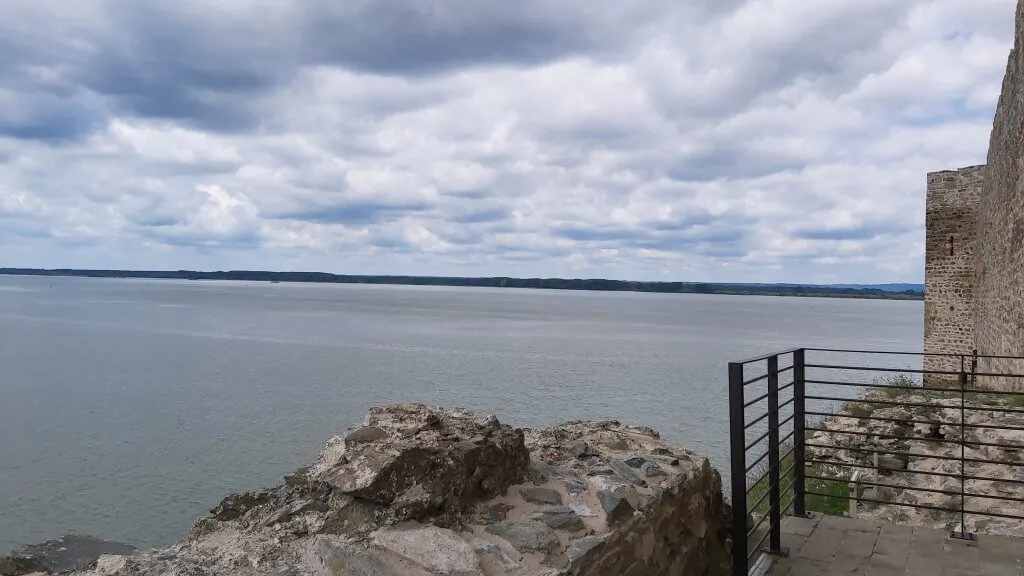
But — and this is what we like about Ram — it adds about 45 minutes to a Đerdap trip and gives you a noticeably different feel than Golubac. It’s older. It’s smaller. It has the caravanserai, which Golubac doesn’t. And the Danube view from the Donžon is, in our opinion, the best on this stretch of the river.
For travelers who already enjoy stepping off the main path, or for guests who want a fuller picture of Ottoman Serbia, Ram earns its place on the itinerary. If you’re planning a day trip from Belgrade that includes Ram, Golubac, or other Danube sites, send us a message and we’ll put together a route based on what you actually want to see.
Interested in a private tour to Ram Fortress?
Visit Ram and Golubac Fortress in a day-trip from Belgrade