
At Balkan Chauffeur, Novi Sad is one of our most-driven destinations for private tours and transfers from Belgrade — and Petrovaradin Fortress is the stop that almost every client wants to see. We do the route weekly during the season, and after dropping off at the fortress hundreds of times, we know which gate to use, where the parking actually works, what’s worth your time on site, and what the catacombs are really like. This post is the version of that knowledge we wish more travelers had before they came.
One thing has changed for 2026 worth flagging upfront: EXIT Festival left Petrovaradin in 2025 after 25 years on the fortress. For visitors, that means July at Novi Sad now looks like the rest of the summer — open access, no road closures, and normal hotel availability. The fortress itself is unaffected and operates as it always has.
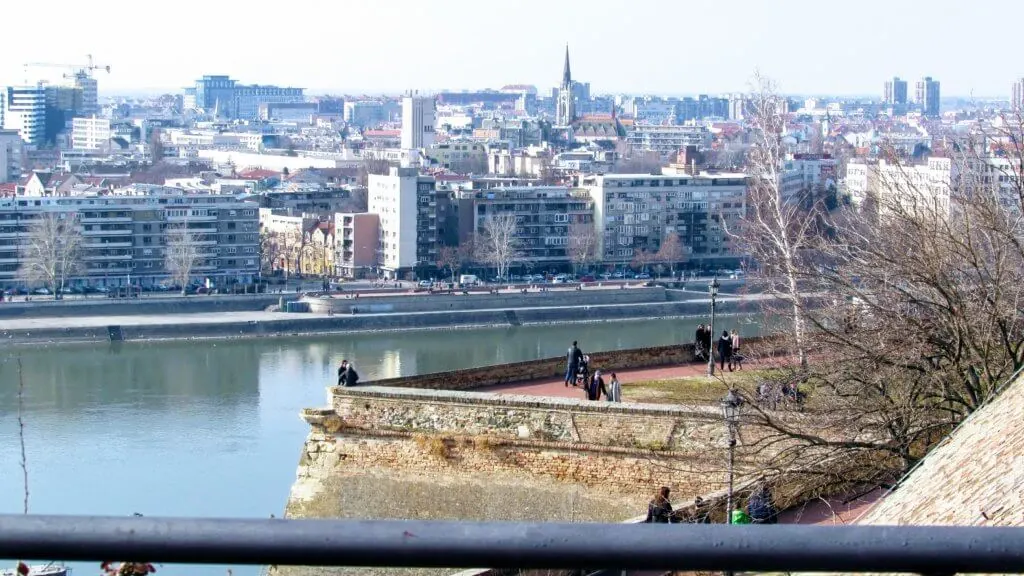
Where Petrovaradin Fortress Is
Petrovaradin sits on the right bank of the Danube, directly across the river from the center of Novi Sad. The Varadin Bridge connects the two and crosses the Danube in just a few minutes. Distances we deal with daily:
- About 80 km from Belgrade — roughly 1 hour by car on the highway
- About 70 km upstream from Belgrade Fortress, by river
- A few minutes from Novi Sad city center across the Danube
- 20 km from Sremski Karlovci
- About 90 km from Belgrade Airport (Nikola Tesla)
This is one of the few major Serbian attractions where the drive is genuinely easy. The Belgrade–Novi Sad highway is good, traffic is reasonable outside rush hour, and the fortress is the first thing you see as you cross the Varadin Bridge.
A Quick History — How a Habsburg Border Post Became a City Symbol
Most online articles about Petrovaradin repeat a long, confusing history. Here’s the version we tell clients in the car:
- The Petrovaradin cliff has been settled since the Stone Age. Romans built a fort here called Cusum in the 1st century AD, on the Danube limes — the empire’s northern frontier.
- In the medieval period, Hungarians and later Ottomans held it. The Ottomans ran the area for about 150 years.
- The fortress as you see it today was built by the Habsburgs starting in 1692, with the cornerstone laid by Charles Eugène de Croÿ. Construction continued, with major works between 1753 and 1776, for most of the 18th century.
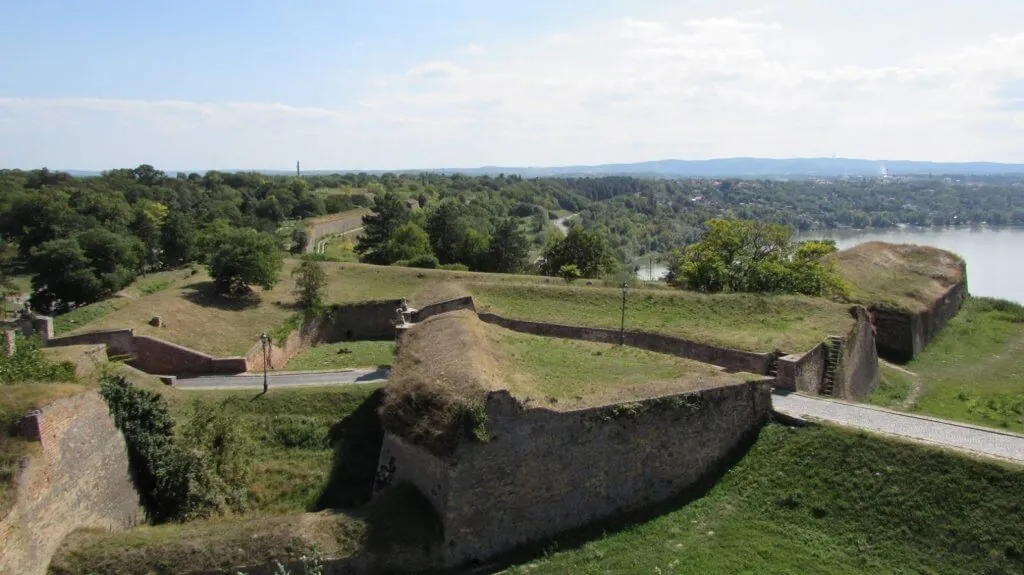
- It was designed in the Vauban style of military fortification — star-shaped bastions, layered defensive walls, a complex of trenches. It is often cited as one of the largest preserved fortresses in Europe, covering over 100 hectares with more than 5 km of outer defense walls.
- Its strategic importance earned it the nickname “Gibraltar on the Danube.”
- The fortress saw real combat in the 1716 Battle of Petrovaradin, when Prince Eugene of Savoy defeated the Ottoman army here. The victory effectively ended the Ottoman threat to Central Europe.
- It remained a working military installation until 1951, when most of it was handed over to civil use. Since then, the upper plateau has become a cultural center — museums, ateliers, the Academy of Arts, the Planetarium, the Observatory, restaurants, and the famous Hotel Leopold I.
The Famous Clock Tower (and Its Reversed Hands)
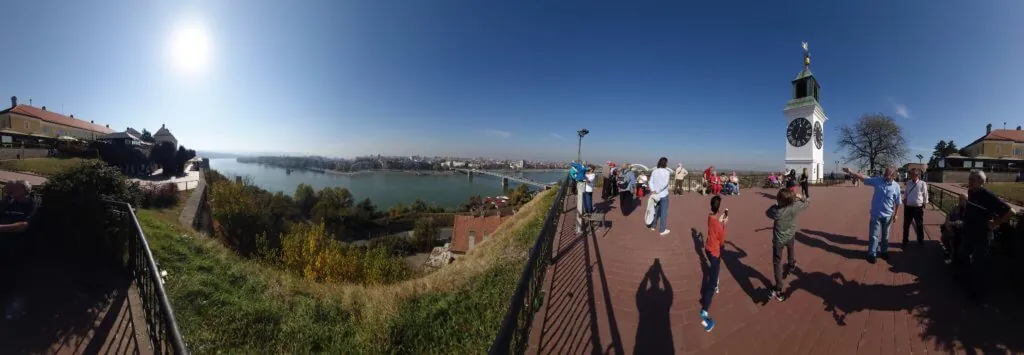
The most photographed part of Petrovaradin is the Clock Tower on the Sveti Ludvig (St. Louis) Bastion. Most visitors notice something off after a minute of looking at it: the hour hand is much larger than the minute hand — the opposite of every other clock you’ve ever seen.
The official explanation is practical. The clock was placed on the upper bastion in 1750, as a gift to Novi Sad when it became a free royal city. Boatmen on the Danube needed to read the time from a distance, and the hour was the information that mattered. Hours moved slowly enough to read clearly from the river; minutes were a detail. So the bigger hand showed hours, and the smaller hand showed minutes — and stayed that way for nearly 300 years.
It’s a small detail, but it’s the one fact about Petrovaradin that almost every client remembers afterward.
The Catacombs: 16 Kilometers of Tunnels Under the Fortress
The biggest “hidden” attraction at Petrovaradin is its underground. Beneath the fortress is a 4-level network of military galleries roughly 16 km long in total. This was the Habsburg counter-mining system — designed after the Austrians lost the fortress of Schweidnitz in the Seven Years’ War, when they realized enemy engineers could tunnel under any standard fort and blow up the walls from below. So they built tunnels under tunnels, with listening posts and counter-mine chambers, to detect and stop attackers before they reached the surface.
You can’t walk through it on your own. Two main options:
City Museum guided tour
Run by the City Museum of Novi Sad (Muzej grada Novog Sada), based on the upper plateau. The standard tour walks about 1 km of tunnels at the first level, lasts roughly 30–45 minutes, and explains the defensive logic and the history. Tours typically run several times a day in summer. For smaller groups, the museum sometimes requires that a minimum number of tickets be paid for — confirm directly when booking.
Museum hours typically: Tuesday–Sunday, around 9:00–17:00. Closed Mondays and on public holidays. Tickets for the museum are very affordable, and the underground tour is a separate, slightly higher ticket. Check current prices and times locally before you go.
Adventure tours with 3D World / UGRIP
A separate operator runs longer expedition-style tours into deeper sections of the catacombs — beyond what the museum opens to the public. These last 3–5 hours, require booking ahead, and are a real adventure rather than a museum walk. Children under 14 not allowed independently. The temperature in the tunnels stays around 12–16°C year-round, so bring a sweater even if it’s August outside.
For most clients, the museum tour is enough. If you’re really into military history or underground spaces, the longer adventure version is unique.
What Else Is Worth Seeing on Site
Beyond the clock tower, museum, and catacombs:
- The upper plateau panorama — one of the best views in northern Serbia. The whole of Novi Sad spreads out across the river. Especially good at sunset.
- The Baroque Lower Town (Donji grad) — at the foot of the fortress, a small cobblestoned quarter with cafés, restaurants, ateliers, and a slower pace than the upper plateau.
- Hotel Leopold I — a hotel inside the fortress, in a converted Habsburg-era building. Even if you’re not staying, the lobby and terrace are worth a look.
- The Planetarium and Observatory — both still active. The Observatory typically opens to the public on Thursday evenings, free entry, but capacity is limited. Check the schedule locally.
- Atelje 61 — the famous Novi Sad tapestry workshop, with a small gallery on site.
- Cafés on the upper plateau — several have terraces with the same panoramic view as the museum, and a coffee here is one of the easier pleasures in Novi Sad.
Practical: Tickets, Hours, and Access
Entrance to the fortress itself
Free, 24/7, year-round. The fortress grounds and the upper plateau are an open public space. You only pay for specific attractions inside — museum, catacombs, planetarium events.
City Museum and underground tour
Typically open Tuesday–Sunday, around 9:00–17:00. Closed Mondays. Standalone museum entry is affordable; the catacomb tour is sold separately and runs higher. Prices change periodically, so check at the ticket desk on the day. Last entry is well before closing — don’t arrive at 16:30 expecting a full underground tour.
Two ways to access the fortress
This is where most travelers get confused, because Petrovaradin has two distinct entrances at very different elevations:
- Upper plateau (Gornji plato) — where the museum, clock tower, restaurants, and panoramic views are. Reach by car via the road from Petrovaradin town. Parking is available near the museum and is usually easy to find outside summer weekends.
- Lower town / Baroque quarter (Donji grad / Podgrađe) — at the base of the fortress walls. Smaller, quieter, more atmospheric, but you’ll need to walk uphill if you want to see the upper plateau too.
For travelers with limited time or mobility issues, the upper plateau is the right answer — you can see almost everything important without climbing. We almost always drop clients there directly. If you want both, allow at least 2–3 hours.
How to Get to Petrovaradin from Belgrade
By private car
Highway A1 toward Novi Sad, exit toward Petrovaradin, follow signs to the fortress. Roughly 1 hour outside rush hour. Parking on the upper plateau is easy most days.
By bus
Direct buses from Belgrade to Novi Sad run frequently and take 1.5 hours. From Novi Sad bus station you’d take a city bus across the river to the fortress, or walk (about 25–30 minutes from the station). Local bus lines change occasionally — ask at the station for the current line.
By train
The Soko (high-speed) train from Belgrade to Novi Sad takes about 35–40 minutes, and is honestly the fastest option city-center to city-center. From Novi Sad station, take a city bus or taxi to the fortress.
With a private driver
What we do most often. Door-to-door pickup in Belgrade, direct to the upper plateau, wait while you tour, and then continue with whatever combination you want — Sremski Karlovci wine tasting, Fruška Gora monasteries, Novi Sad city center, or back to Belgrade. The advantage over a bus or train is that you skip two transfers and a walk, and Petrovaradin becomes one stop in a fuller Vojvodina day instead of an isolated visit. We use the same vehicles from our Belgrade chauffeur service for these trips, so it’s a comfortable ride for the highway both ways.
If you’re already staying in Novi Sad and just need a driver for the day, our Novi Sad private driver service can handle the fortress plus surrounding stops without the Belgrade leg.
What We Often Combine With Petrovaradin
Petrovaradin alone takes 1.5–2 hours. Almost no one drives from Belgrade for just that, and we usually pair it with one or two of the following:
- Novi Sad city center — Trg slobode, Dunavska street, the Catholic cathedral, lunch in town. Crosses the Varadin Bridge in a few minutes from the fortress.
- Sremski Karlovci — 20 km away, a small Baroque town known for wine cellars and the historic seminary. Half a day in itself.
- Fruška Gora monasteries — 5–6 working Orthodox monasteries scattered through the national park south of Novi Sad. Realistically you can see 2–3 in half a day.
- Krušedol Monastery — the most-visited Fruška Gora monastery, often combined with Sremski Karlovci.
The most balanced day from Belgrade: Petrovaradin + Sremski Karlovci + a quick lunch + back via Novi Sad city center. About 8–9 hours door-to-door, doesn’t feel rushed.
Honest Take: Is Petrovaradin Worth It?
Yes — but adjust your expectations. Petrovaradin isn’t dramatic the way Golubac is. There’s no single big visual punch. What it offers is a different kind of experience: a working Habsburg fortress that feels lived-in, with a real city across the river, cafés on the bastions, and an underground network that genuinely surprises people.
The fortress is also the easiest major Serbian attraction to combine with other things in one day. An hour from Belgrade, a few minutes from Novi Sad, twenty minutes from Sremski Karlovci. That logistical simplicity is part of why it ends up on so many client itineraries.
Skip it if you’re allergic to cobblestones and slow walking. Make time for it if you want to see what a successful Vauban-era fortress actually looks like 270 years later — and if you want one of the better sunset views in northern Serbia.
If you’re planning a Belgrade-to-Novi Sad day trip that includes Petrovaradin, the catacombs, Sremski Karlovci, or Fruška Gora, send us a message and we’ll build the route around what you actually want to see.
Interested in Novi Sad Private Tour?
Visit Petrovaradin Fortress and Novi Sad in round-trip from Belgrade

Related Posts

Belgrade Private Driver & Limo Service
The most popular taxi transfers from Belgrade Belgrade Airport to city center Belgrade to Budapest...

Ram Fortress: How We Plan Trips from Belgrade
At Balkan Chauffeur we drive guests through eastern Serbia almost every week, and Ram...

Golubac Fortress from Belgrade: Driver Advice for an Iron Gate Day Trip
At Balkan Chauffeur, Golubac is one of our most-requested day trips with a private driver from...

Private Tours from Belgrade
PRIVATE TOURS FROM BELGRADEMany travelers visiting Belgrade don’t realize how much more Serbia has...

Fruška Gora Monastery Car Tour: Balkan Chauffeurs’ Guide to a Day Worth Taking
Fruška Gora has 16 monasteries — most travelers can realistically visit 2–3 in a day. Practical tips, distances, and which ones to visit.

Sremski Karlovci Wine Tasting: Our Chauffeurs’ Guide to Bermet and the Best Cellars
Sremski Karlovci wine tasting from Belgrade or Novi Sad. A practical guide to Bermet, the cellars, and how a private driver works.
